The Bhutan Swiss Archaeology Project (BSAP)


Seiteninhalt
Abstract
Most historical knowledge about the Himalayan Kingdom of Bhutan derives from Buddhist monastic writings from the 7th century CE onwards, while its prehistory remains largely unexplored as archaeology in Bhutan is still an emerging discipline. The Bhutan–Swiss Archaeology Project (BSAP) addresses this gap through interdisciplinary research on long-term human–environment interactions, landscape formation, and burial practices. Combining archaeological research with knowledge transfer, targeted training, and community engagement, the project strengthens scientific exchange between Bhutanese and Swiss partners while contributing to the preservation of cultural heritage in the context of ongoing environmental change.
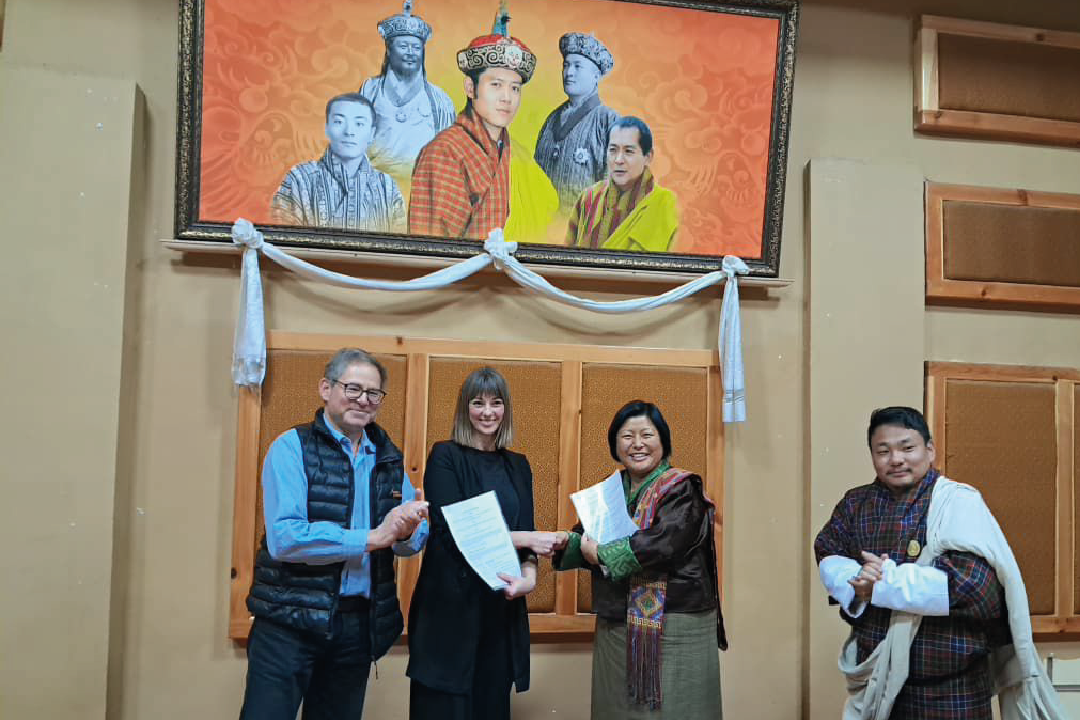
The BSAP is a collaboration between the Department of Culture and Dzongkha Development of the Ministry of Home Affairs in Bhutan, the Swiss Liechtenstein Foundation for Archaeological Research Abroad (SLSA), and the University of Zurich’s Division of Prehistoric Archaeology. The project is coordinated by Pema Wangchuk and Sonam Gyeltshen (PIs, Heritage Sites and Archaeology Division, Bhutan) and Dr Julia Schönicke (PI, University of Zurich).
Initiated by the Royal Government of Bhutan, the project aims to strengthen archaeology as part of cultural heritage management and sustainable tourism. Since 2008, BSAP has developed through five project phases combining field research, institutional development, and training. These activities contributed to the institutionalisation of archaeology in Bhutan and established foundations for long-term research across the country. Fieldwork has been conducted in diverse regions and environmental settings, ranging from fortified sites and high-altitude landscapes in central and eastern Bhutan to subtropical environments in the south.
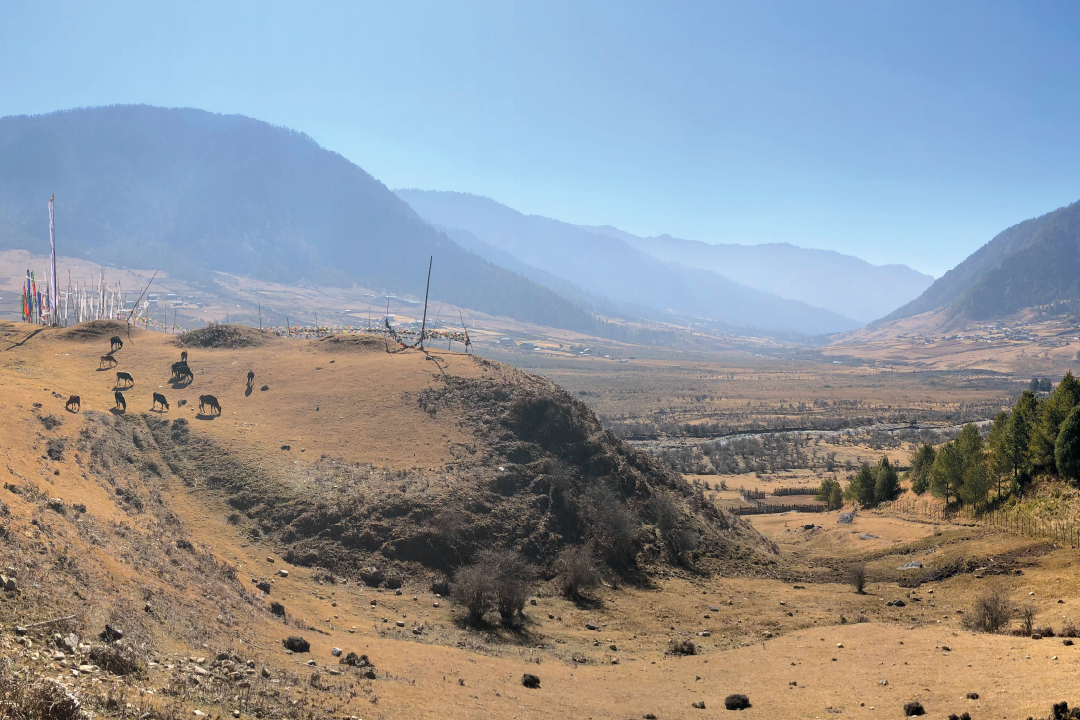
One archaeological hotspot is Phobjikha Valley in west-central Bhutan (ca. 3000 m asl). This periglacial landscape is characterised by rich biodiversity and ecologically sensitive environments but is at the same time increasingly affected by climate change, tourism, and land-use pressures, creating growing challenges for also for archaeological heritage. Surveys, geophysical prospection, and excavations conducted between 2013 and 2019 documented more than 90 archaeological sites, including 48 human-made mounds that are interpreted as burial sites. Excavations of three mounds produced radiocarbon dates ranging from the mid-8th century calBCE to the 4th century calCE, indicating that these structures predate the arrival of Buddhism in Bhutan. Their chronology and architectural features provide an important dataset for understanding early burial practices and landscape development in the eastern Himalayas, particularly in comparison with similar burial mound traditions in central Tibet, where securely dated archaeological evidence remains limited.
Current research in Phobjikha examines relationships between people, landscapes, and environmental change through a multi-proxy approach combining excavation, survey, remote sensing, and geoarchaeological methods. New and legacy datasets will be integrated into a national GIS-based archaeological database developed according to FAIR and CARE principles. Small-scale excavations, systematic sampling, and laboratory analyses support the reconstruction of landscape dynamics and depositional histories while minimising disturbance to ecologically sensitive environments.
Through collaboration with local communities and the development of research infrastructure, the project contributes to sustainable heritage management and long-term archaeological research in Bhutan.
Team Members
Pema Wangchuk, PI HSAD
Sonam Gyeltshen, PI HSAD
Sonam Pelzom, HSAD
Julia Schönicke, PI UZH
Christian Bader, UZH
Elsa Nautsch, UZH
Jan Hubert, Archaeoinformatics
Collaboration and Partners
- Ministry of Home Affairs, Department of Culture and Dzongkha Development – Heritage Sites and Archaeology Division (HSAD), https://doc.gov.bt/
- Swiss-Liechtenstein Foundation for Archaeological Research Abroad (SLSA), https://slsa.ch/
- Museum Rietberg Zürich, https://rietberg.ch/
- Eastern Atlas Geophysical Prospection, https://www.eastern-atlas.de/
- Commission of Extra-European Cultures, German Archaeological Institute , https://www.dainst.org/kaak
Selected publications
- Bader, Christian, Christina Franken, and Sonam Gyeltshen. 2024. ‘The 2023 Investigations of the Bangtsho Phodrang Ruins in the Lhuntse District in Eastern Bhutan’. In SLSA Annual Report 2023, edited by Schweizerisch-Liechtensteinische Stiftung für Archäologische Forschungen im Ausland, 361–87. Zürich, Alpnach Dorf: Koprint AG.
- Della Casa, Philippe, Peter Fux, and Andreas Mäder. 2012. ‘Bhutan-Swiss Collaboration to Institutionalise Archaeology in Bhutan’. In SLSA Annual Report 2011, edited by Schweizerisch-Liechtensteinische Stiftung für Archäologische Forschungen im Ausland, 173–86. Zürich: Schweizerisch-Liechtensteinische Stiftung für Archäologische Forschungen im Ausland, DOI 10.5167/UZH-66878. https://www.zora.uzh.ch/id/eprint/66878.
- Fux, Peter, Christoph Walser, and Namgyel Tshering. 2014. ‘Archaeology in the Kingdom of Buthan: Exploring the Country’s Prehistory’. In SLSA Annual Report 2013, 29–40. Zürich: Schweizerisch-Liechtensteinische Stiftung für archäologische Forschungen im Ausland. https://www.zora.uzh.ch/id/eprint/103028.
- Hart, Benjamin. 2020. ‘Results of the Excavation at Mound M31 in Phobjikha, Carried Out as Part of Phase III of the Bhutan-Swiss Archaeology Project’. In SLSA Annual Report 2019, 367–94. Zürich: Museum Rietberg. https://doi.org/10.5167/uzh-192148.
- Tenzin, Karma, and Christian Bader. 2020. ‘Undertakings in 2019 at Phobjikha in Central Bhutan as Part of Phase III of the Bhutan-Swiss Archaeology Project’. In SLSA Annual Report 2019, edited by Schweizerisch-Liechtensteinische Stiftung für Archäologische Forschungen im Ausland, 353–65. Zürich, Alpnach Dorf: Koprint AG. https://www.zora.uzh.ch/handle/20.500.14742/174171.
- Tenzin, Karma, Burkart Ulrich, Christian Bader, Benjamin Hart, and Alex Keiser. 2019. ‘Undertakings in 2017 and 2018 in Phobjikha as Part of Phase III of the Bhutan-Swiss Archaeology Project’. In SLSA Annual Report 2018, edited by Schweizerisch-Liechtensteinische Stiftung für Archäologische Forschungen im Ausland, 405–20. Zürich, Alpnach Dorf: Koprint AG. https://www.zora.uzh.ch/id/eprint/179215.
Previous project phases (2011–2020)
Abstract
The Bhutan Swiss Archaeology Project was initiated by the Royal Government of Bhutan and his excellency Lyonpo Jigmi Y. Thinley, former Minister of Bhutan, with the overall goal to «Contribute to the preservation of Bhutan's cultural heritage and income generation from tourism through strengthening and institutionalization of archaeology». The formal cooperation started in 2008 with the excavation of the medieval fortress of Drapham Dzong in Bumthang. The 1st Educational Workshop on Archaeology within the Bhutan Swiss Archaeology Project cooperation was held in Thimphu and Bumthang from March 28 to April 1, 2011. It was organized as a joint initiative of the Division for Conservation of Heritage Sites, MoHCA, Royal Government of Bhutan, HELVETAS Bhutan, and the Swiss Liechtenstein Foundation for Archaeological Research SLSA. Invited lecturers were from the Dept. of Prehistoric Archaeology of the University of Zurich (Prof. Dr. Philippe Della Casa), the Laboratory of Dendrochronology and Underwater Archaeology of the City of Zurich (Dr. Andreas Mäder), and the Museum Rietberg of the City of Zurich (lic. phil. Peter Fux).
The formal cooperation, focusing on knowledge transfer, is set to support the kingdom of Bhutan in archaeological heritage management, specialized educational programs for Archaeology, and public valorization of archaeological sites.
Team
Prof. Dr. Philippe Della Casa, Dr. Peter Fux, Dr. Eberhard Fischer (SLSA), Christian Bader (SLSA), Karma Tenzin (MoHCA), Division for Conservation of Heritage Sites, MoHCA, Royal Government of Bhutan; HELVETAS Bhutan; Swiss Liechtenstein Foundation for Archaeological Research SLSA
Output
Della Casa, Philippe (2019). Back to Bhutan, 2017-2018. Zürich: Eigenverlag.